


Contact Us
Subscribe to Causeway Insights, delivered to your inbox.
Recent research travel across Europe, the United States, and Asia revealed a consistent message to Causeway investment professionals: a new global investment cycle is underway. Artificial intelligence and electrification are reshaping industries, while geopolitical realignment is influencing where capital is deployed across sectors—from semiconductors to power grids to financial systems.
AI’s Supply Chain Squeeze
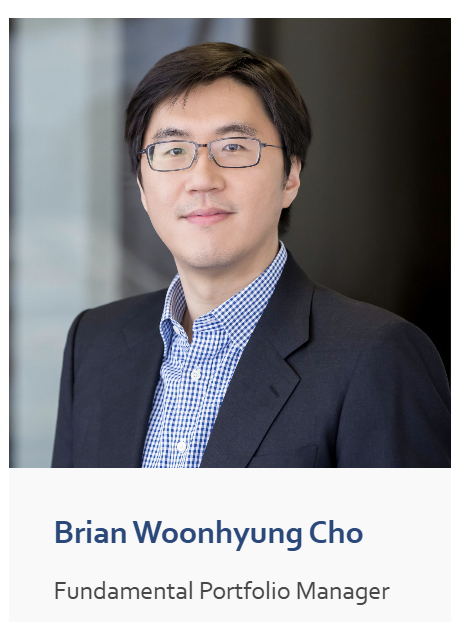
Brian Woonhyung Cho, Fundamental Portfolio Manager
Across Japan, Taiwan, and Korea, the AI semiconductor boom remains constrained by supply.
Travel across the region highlighted a consistent theme: AI infrastructure demand continues to outpace supply, with constraints in memory, advanced packaging (how chips are connected and assembled), and key electronic components.
AI growth is still supply-constrained
Across the hardware supply chain, companies consistently described customer orders well above current production capacity. Rising processing and energy requirements in next-generation AI servers are driving higher content across memory, passive components, power and cooling systems, and advanced packaging. As a result, suppliers reported strong order visibility and increasing pricing leverage.
Key insights
- Semiconductor capacity constraints are extending the current technology investment cycle.
- European policymakers are pushing to keep more savings invested domestically to fund strategic industries and economic growth.
- Companies are ramping up spending to support the next generation of digital and energy infrastructure.
Memory investment is accelerating—but relief is distant
Amid a historic memory shortage, all three major DRAM (dynamic random-access memory) suppliers are accelerating capacity investment, driving stronger orders for semiconductor equipment. However, new fabrication plants will take years to ramp up, meaning meaningful supply relief is unlikely until late 2027. Equipment lead times are lengthening and pricing is rising modestly, suggesting the semiconductor investment cycle may remain elevated and accelerate into 2027.
Memory inflation is reshaping device markets
Tight memory supply is pushing up component costs across PCs and smartphones. High-end devices remain relatively resilient, but low- and mid-tier segments are facing pressure as manufacturers absorb higher bill-of-materials costs. Several companies suggested that limited access to memory could also shift share among device vendors.
AI disruption of software remains a key debate
Investor conversations focused on AI’s potential impact on software, videogames, and IT services. Company perspectives were more measured: while AI is expected to improve developer productivity and lower certain production and delivery costs, enterprises still face significant modernization and data integration work before AI can be deployed at scale. In some cases, companies noted that AI may increase—rather than replace—software development output, allowing more products and features to be released.
Causeway fundamental view:
Causeway global and international value portfolios have exposure to the buildout of AI infrastructure and the broader semiconductor investment cycle. Holdings tied to memory and other essential chip components may benefit as data centers expand, while exposure to large cloud providers should provide participation in the growing need for computing power to support AI.
In IT services, we expect a shift from a headcount-driven business model toward more IP- and outcome-based delivery. While AI-driven productivity gains may create near-term pricing pressure, they should expand the scope of services and support longer-term growth opportunities for the industry.
Europe Wants Its Capital Back
Conor Muldoon, Portfolio Manager
European policymakers and financial leaders increasingly share the same goal: keep more of Europe’s vast savings invested at home. Through capital markets reform and industrial policy, the region is working to redirect trillions of euros toward its own banks, companies, and strategic industries—particularly to support defense, innovation, and digitization of the economy. Geopolitical pressures are reinforcing this shift, pushing Europe to strengthen its internal market and economic resilience. Recent policy developments signal growing momentum to improve competitiveness and deepen the single market for investment capital.

Europe’s banks are in good health
European banks generally are operating with strong capital, limited credit risk, and solid profitability. Across meetings in Paris, executives repeatedly noted that Europe has far less exposure to private credit than the US, leaving balance sheets better positioned if stress emerges in that asset class—an important foundation as Europe seeks to channel more investment through its financial system.
A generational shift in commercial banking
One large French bank pointed to a wave of ownership transitions among mid-sized European businesses. As founders retire and companies change hands, banks with advisory, lending, and capital markets capabilities expect to deepen relationships with the next generation of owners, helping keep financing and strategic advice within Europe’s banking system.
Redirecting Europe’s savings
Policymakers and regulators repeatedly highlighted the push for a Savings and Investment Union, aimed at keeping more European household savings invested within the bloc. New investment rules already require a large share of certain capital flows to remain in Europe, potentially redirecting hundreds of billions of euros into regional markets. The focus is increasingly on channeling this capital into domestic investment rather than exporting it abroad.
Europe’s policy: from regulation to strategic autonomy
The tone in Paris felt notably different from even a year ago. Officials framed Europe’s choice starkly: adapt or fall behind in defense, energy, and technology. Industrial policy and strategic autonomy are now central priorities, supported by efforts to reduce fragmentation and make it easier for companies to operate and scale across the region. The launch of the EU’s “One Europe, One Market” agenda highlights that policymakers are beginning to act on long-standing competitiveness concerns and move toward a more integrated capital market.
Causeway fundamental view:
In this context, the most compelling opportunities lie in well-capitalized, pan-European and multi-market banks that combine strong fee franchises with disciplined cost control and visible capital return stories. These banks help companies raise capital through equity and debt markets and stand to benefit from the rerouting of European savings. At the same time, technology is improving efficiency and supporting margins. Despite this, many are still valued as “old Europe,” even as their earnings trajectories are strengthening.
America’s Power Surge
Ryan Greenwald, Fundamental Research Analyst

My meetings with utilities, power producers, and equipment suppliers highlighted the scale of the challenge facing the US electricity system. Data centers, electrification, and industrial reshoring are driving a step-change in power demand that an aging grid and generation fleet were not built to support. The result is a wave of investment across generation, transmission, and grid infrastructure, with policy debates, affordability concerns, and supply constraints shaping how that buildout unfolds.
Utilities are entering a stronger growth cycle
Sector growth expectations continue to move higher as companies incorporate accelerating load growth into their outlooks. The median US utility annual earnings growth forecast has moved from 5–7% historically to nearly 8% today, with room for further increases as spending on data center-related infrastructure begins to flow through into earnings.
Data centers are reshaping the power market
Political focus on electricity affordability is pushing hyperscalers toward “bring your own generation” models, ensuring new demand funds new supply. Utilities that can build new power supply and show clear benefits to customers appear best positioned. Merchant power producers who have relied on selling existing power at premium prices may face a more challenging path.
Market structure will determine the winners
In vertically integrated markets, utilities that own their power plants can structure agreements where large customers help fund new infrastructure while lowering costs for residential customers. In competitive markets, where power is purchased and passed through to customers, tight supply has led to price spikes and increased political scrutiny. As new power supply is built in these markets, the value of existing assets may come under pressure.
Supply constraints are extending the cycle
The cost of new gas-powered plants has more than doubled in five years, with turbines, engineering contractors, and skilled labor all in tight supply. Manufacturers expect turbine production slots through 2029–2030 to be sold out by year-end, suggesting the current investment cycle could extend well into the next decade.
Causeway fundamental view:
Utilities in Causeway global and international value portfolios should benefit from rising electricity demand, driven in part by data center growth, and the investment required to expand power generation and grid infrastructure.
Companies with strong balance sheets and operating in supportive regulatory environments appear best-placed to capture these opportunities in the US and internationally.
Conclusion: Identifying Opportunities in an Emerging Investment Cycle
Across regions and sectors, our research points to a new infrastructure cycle underway, driven by AI, electrification, and geopolitical priorities. In Europe, this is increasingly accompanied by a deliberate effort to redirect domestic savings toward funding defense and innovation, and to build a more competitive, integrated capital market. Our fundamental investment process is designed to identify inflection points—when industry conditions are improving but valuations have yet to fully reflect the upturn. Today, across multiple geographies, we see evidence of those conditions taking shape.
Travel remains central to our fundamental research process. Meeting with companies, policymakers, and industry participants provides context that cannot be captured in data alone. It reveals bottlenecks, shifts in behavior, and emerging opportunities before they are widely recognized. These first-hand insights reinforce our view that the next phase of the cycle is already underway yet still underappreciated by the market, creating compelling opportunities to generate attractive returns for our clients.
This market commentary expresses Causeway’s views as of March 2026 and should not be relied on as research or investment advice regarding any stock. These views and any portfolio holdings and characteristics are subject to change. There is no guarantee that any forecasts made will come to pass. Forecasts are subject to numerous assumptions, risks, and uncertainties, which change over time, and Causeway undertakes no duty to update any such forecasts. Information and data presented has been developed internally and/or obtained from sources believed to be reliable; however, Causeway does not guarantee the accuracy, adequacy, or completeness of such information.
The views herein represent an assessment of companies at a specific time and are subject to change. There is no guarantee that any forecast made will come to pass. This information should not be relied on as investment advice and is not a recommendation to buy or sell any security. The securities identified and described do not represent all of the securities purchased, sold, or recommended for client accounts. Our investment portfolios may or may not hold the securities mentioned. The reader should not assume that an investment in the securities identified was or will be profitable. For full performance information regarding Causeway’s strategies, please see www.causewaycap.com.
In the United Kingdom, this communication is prepared and issued by Causeway Capital Management (UK) Ltd and approved by Robert Quinn Advisory LLP, which is authorised and regulated by the UK Financial Conduct Authority (“FCA”). Causeway Capital Management (UK) Ltd is an Appointed Representative of Robert Quinn Advisory LLP. This material constitutes a financial promotion for the purposes of the Financial Services and Markets Act 2000 (the “Act”) and the handbook of rules and guidance issued from time to time by the FCA (the “FCA Rules”).
This material is for information purposes only and does not constitute an offer to subscribe for or purchase of any financial instrument. Causeway Capital Management (UK) Ltd neither provides investment advice to, nor receives and transmits orders from, persons to whom this material is communicated nor does it carry on any other activities with or for such persons that constitute “MiFID or equivalent third country business” for the purposes of the FCA Rules. All information provided is not warranted as to completeness or accuracy and is subject to change without notice. This communication and any investment or service to which this material may relate is exclusively intended for persons who are Professional Clients or Eligible Counterparties for the purposes of the FCA Rules and other persons should not act or rely on it. This communication is not intended for use by any person or entity in any jurisdiction or country where such distribution or use would be contrary to local law or regulation.
